
Let’s be honest: how many times have you rushed home just to unhook your bra, letting out a sigh of relief as if you’ve just been released from a medieval corset? If that sounds familiar, you are not alone. Studies suggest that up to 80% of women wear the wrong bra size, unknowingly sacrificing both comfort and the silhouette of their favorite outfits.
In the world of vintage fashion, where the structure of a garment is everything, what you wear underneath matters just as much as the dress itself. That stunning 1950s pencil dress won’t sit right if the foundation isn’t solid. Learning how to measure your bra size at home isn’t just about numbers; it’s about reclaiming your comfort and giving your clothes the fit they deserve.
Why the Right Fit Changes Everything
It’s not just vanity—it’s physics. A properly fitted bra distributes weight evenly, saving you from back pain and those dreaded indentations on your shoulders. Visually, it lifts the bust away from the waist, instantly creating a longer, leaner torso. It’s the oldest styling trick in the book, used by Hollywood costume designers for decades.
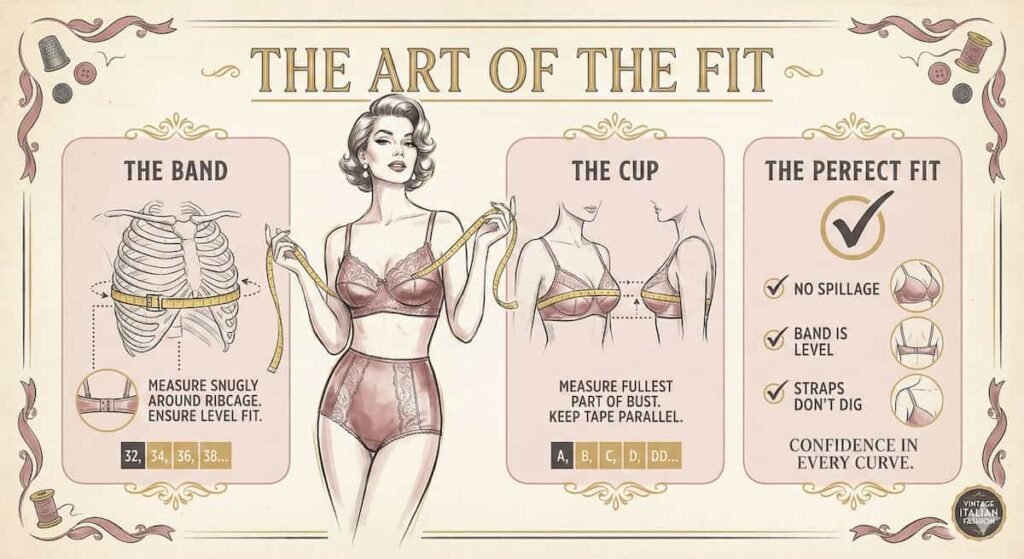
The “At-Home” Fitting Room: A Step-by-Step Guide
Forget awkward fitting rooms with harsh lighting. You can find your accurate size in the privacy of your bedroom. All you need is a soft measuring tape (the kind seamstresses use), a mirror, and no top on. Here is the foolproof method to finding your starting point.
1 Measure the Band (The Foundation)
Wrap the measuring tape snugly around your ribcage, directly underneath your bust. Ensure the tape is parallel to the floor all the way around your back. It should feel tight but not suffocating.
If you get an odd number (like 31 inches), round up to the nearest even number (32). This is your Band Size.
2 Measure the Bust (The Volume)
Stand straight and wrap the tape around the fullest part of your bust (usually across the nipples). Keep the tape somewhat loose—don’t squish anything!
Pro tip: If your breasts naturally sit a bit lower, wear a non-padded bra for this step to get the lift right.
3 Do the Math (The Cup)
Subtract your Band size from your Bust size. The difference tells you your cup size.
1 inch = A
2 inches = B
3 inches = C
4 inches = D
Example: Band 34, Bust 36. Difference is 2. You are a 34B.
Lo sapevi? (Did you know?) Vintage sizing is a wild west! A “Size 36” from the 1960s is rarely the same as a modern 36. When buying vintage lingerie online, ignore the tag size entirely and ask the seller for the flat measurements in centimeters or inches.
The Reality Check: Does it Actually Fit?
Calculators are great, but bodies are soft, malleable, and unique. A calculator gives you a starting point, but the mirror tells the truth. Here is how to diagnose if your current bra is working against you.
| The Issue | The Likely Culprit | The Fix |
|---|---|---|
| Band rides up the back | Band is too big | Size down the band, size up the cup (e.g., 36C → 34D). |
| “Quad-boob” (spilling over) | Cup is too small | Go up a cup size immediately. |
| Straps digging in | Band is too loose | The band should do 80% of the work. If it’s loose, the straps take the weight. Tighten the band. |
| Center gore floats | Cup is too shallow | The center piece should lie flat against your sternum. Try a larger cup. |
Finding the Right Style for Your Shape
Just as you wouldn’t wear a 1920s flapper dress if you wanted to accentuate a 1950s hourglass figure, different bra styles serve different “architectural” purposes.
- For the Curvy & Full-Busted: Look for Balconette styles or “cut-and-sew” cups (bras made of multiple pieces of fabric rather than one molded foam piece). These provide structural support that acts almost like a mild corset.
- For the Petite Frame: A Bralette or a wireless triangle bra is chic and comfortable. In the 70s, this natural look was the height of fashion.
- For Flexibility: A Multi-way bra is essential for vintage lovers. Necklines in the past varied wildly, from boat necks to deep V-backs.
A Note on “Sister Sizing”
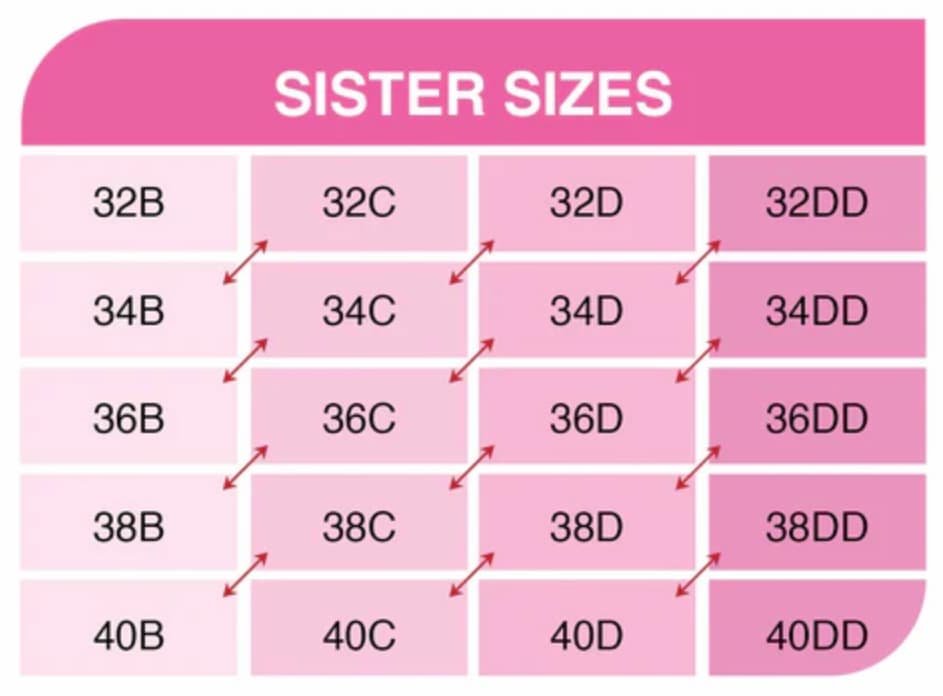
Ever found a stunning bra on sale but they didn’t have your exact 34C? You might be able to wear a 32D or a 36B. This is called sister sizing: when you go down a band size, go up a cup size to keep the volume the same (and vice versa). It opens up a whole new world of options, especially when hunting for rare vintage pieces where sizes are scarce.
Ready to upgrade your vintage wardrobe?
Understanding your measurements is the first step to curating a closet that feels as good as it looks. If you want more practical style guides, deep dives into fashion history, and exclusive tips on where to find the best Italian vintage gems, join our community.
Or join the conversation on Telegram for daily inspiration!