
I’ll admit it: I spent years convinced ties belonged in the same category as fax machines and rotary phones—relics of a time when men wore hats to the office and women weren’t allowed in the boardroom. Then I spotted a twenty-something in Milan wearing a paper-thin leather tie over a sheer button-down, and something clicked. The vintage tie wasn’t dead. It had simply been waiting for the right moment to shed its corporate skin.
What’s Driving the Vintage Tie Revival in 2026?
Walk through any major city right now and you’ll notice something unexpected: vintage ties are creeping back into the visual landscape, but not in the way your grandfather wore them. The resurgence isn’t nostalgic—it’s insurgent. According to market analysts, the global necktie sector reached $2.11 billion in 2025, with projections climbing to $2.75 billion by 2034. But raw numbers don’t tell the whole story.
What’s changed is context. The tie has detached itself from its original function—signaling conformity, professionalism, the corporate uniform—and morphed into something closer to jewelry or sculpture. Think of it as the fashion equivalent of sampling in hip-hop: taking something established, stripping it down, and rebuilding it into something unrecognizable yet strangely familiar.
The shift reflects broader currents in how we dress. Gender-fluid wardrobes, the blurring of formal and casual codes, the elevation of accessories as statement pieces—all of this creates space for the tie to reinvent itself. It’s no longer about Windsor knots and silk stripes. It’s about provocation.


How Are Designers Reimagining Vintage Neckwear?
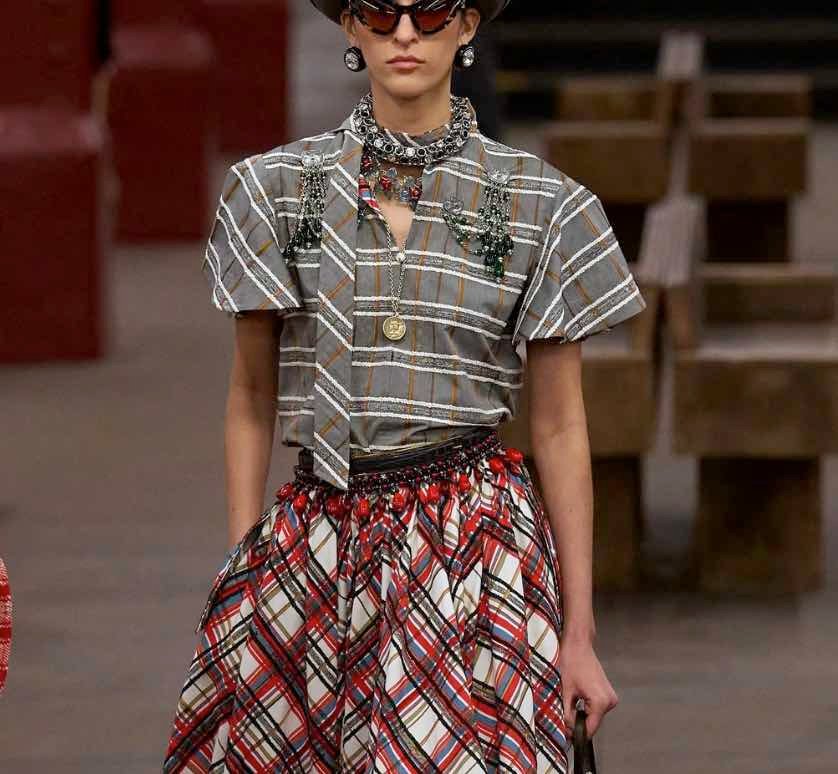
Recent runway presentations reveal a fascinating split in approach. Some designers treat the tie as raw material for deconstruction. Others preserve its essence while warping its proportions or materials beyond recognition.
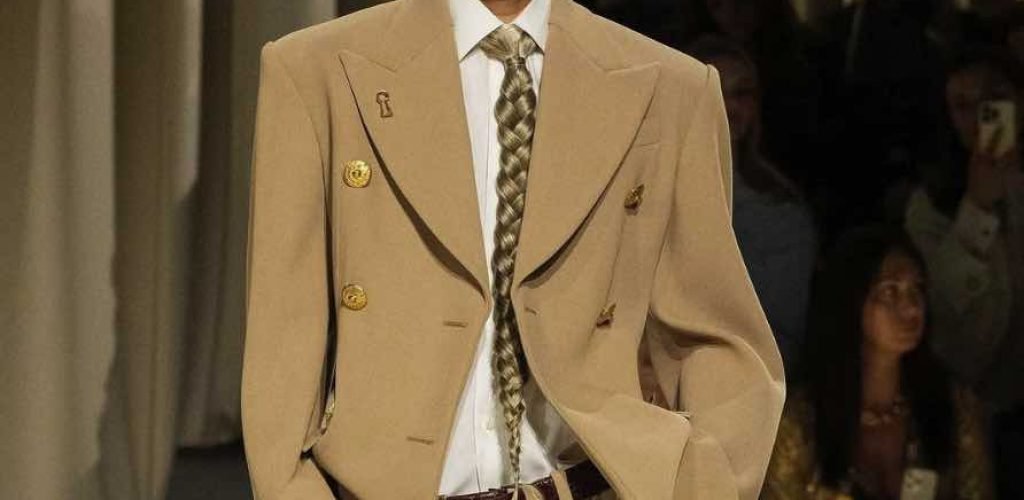
Consider the extremes. At one end, you find ties reduced to mere graphic gestures—impossibly thin strips of patent leather that read more like drawn lines than fabric. At the other, you encounter sculptural experiments: braided pieces that mimic hair, wood-carved neckwear that straddles the line between accessory and art object, ties constructed from multiple clashing patterns stitched into single chaotic lengths.
The most intriguing development might be the tie’s disappearance into the garment itself. Several brands have started integrating neckties directly into shirt construction, eliminating the separation between clothing and ornament. What does it mean when a tie stops being an accessory you add and becomes an inseparable part of the garment’s architecture?
Smart tip: When hunting for vintage ties at thrift stores or online marketplaces, look beyond traditional silk pieces. The most compelling finds often come from unexpected eras—1970s polyester with surreal prints, 1990s ultra-skinny ties in technical fabrics, even 1950s knit ties that anticipate today’s texture-mixing trends.



Why Do Vintage Ties Matter for Sustainable Fashion?
Here’s where the story gets interesting from an environmental standpoint. The vintage clothing market continues its expansion partly because younger consumers recognize the fashion industry’s ecological toll—over a billion garments produced annually, with massive waste streams. Choosing vintage isn’t just aesthetic preference; it’s ethical positioning.
Ties occupy a unique place in this ecosystem. They’re small, durable, easy to store and ship, and often made from higher-quality materials than contemporary equivalents. A well-constructed 1960s silk tie can outlast a dozen modern versions. Plus, ties from past decades carry visual codes that read as distinctive in today’s landscape—the bold geometrics of the 1970s, the restrained elegance of mid-century designs, the playful novelty prints of the 1990s.
The resale platforms driving vintage fashion—Depop, eBay, Etsy, specialized vintage boutiques—have made sourcing vintage accessories remarkably straightforward. You can find Italian silk ties from the 1980s for less than the cost of a new synthetic version, often with superior hand-feel and lasting power.
Did you know? The width of a tie serves as a reliable dating tool for vintage pieces. Ultra-wide ties (4+ inches) typically indicate 1970s origin, while ultra-skinny versions (2 inches or less) point to early 1960s or late 2000s production. Standard width (3-3.5 inches) dominated the 1980s through early 2000s.

How Should You Style Vintage Ties in 2026?
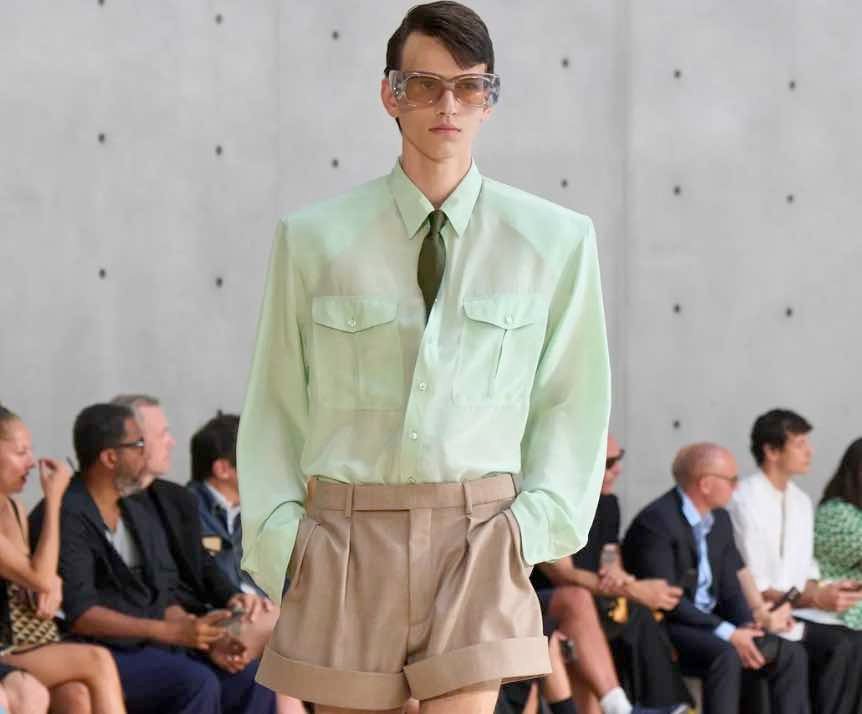
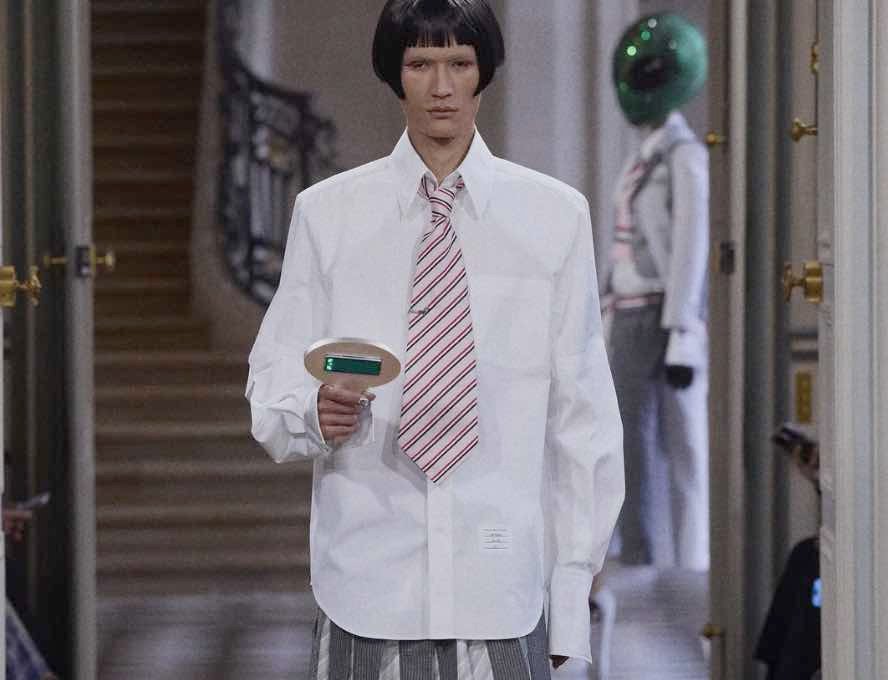
Forget everything you learned about tie-wearing from your father or corporate dress codes. Contemporary styling treats the tie as disruptive element rather than finishing touch.
Pair vintage skinny ties with oversized workwear jackets and wide-leg trousers for proportion play that references both 1960s mod culture and 1990s grunge. Try layering a thick knit tie from the 1950s over a technical athletic shirt—the material clash creates tension that feels current. Wear a boldly patterned 1970s tie loose and low with an unbuttoned collar for a louche, undone effect that subverts traditional formality.
The key lies in approaching the tie as isolated statement rather than ensemble completion. It shouldn’t “match” in any conventional sense. Think of it as the visual equivalent of a solo instrument cutting through an arrangement—distinct, slightly jarring, impossible to ignore.
Women wearing vintage men’s ties creates particularly compelling results. The gender subversion already embedded in the garment doubles when it crosses traditional boundaries. A slim 1960s tie worn with a slip dress reads entirely differently than the same tie with a suit, yet both combinations work because they refuse expected pairings.
Where Can You Find the Best Vintage Ties?
The hunt matters as much as the find. Physical vintage stores offer tactile experiences that online shopping can’t replicate—you can assess fabric weight, examine construction details, spot condition issues that photos might hide. Cities with strong vintage scenes (London, Berlin, New York, Tokyo, Milan) support specialized dealers who curate ties by era, style, or designer.
Online platforms expand possibilities but require different skills. On Etsy, search for specific decades or design movements rather than generic terms. eBay rewards patience—set alerts for brands known for quality neckwear (Hermès, Ferragamo, Gucci from certain periods) and wait for pieces to surface below market value. Depop and Instagram-based vintage sellers often target younger demographics with pre-curated selections that lean toward 90s vintage and Y2K aesthetics.
Estate sales and thrift stores remain underrated sources, especially in affluent neighborhoods where previous generations accumulated substantial wardrobes. I’ve found pristine 1950s silk ties with original tags for under five dollars, simply because contemporary thrift shoppers overlook the accessory section.
What Makes a Vintage Tie Worth Keeping?
Quality reveals itself through specific markers. Hand-rolled edges indicate superior construction—you’ll see tiny, irregular stitches rather than machine-straight seams. Pure silk develops a particular luster with age that synthetic fabrics can’t match. Check the tie’s underside for maker’s labels; even if you don’t recognize the brand, the presence of detailed labeling suggests better manufacturing standards.
Condition matters, but don’t demand perfection. Minor stains or wear can often be addressed through professional cleaning. Small moth holes, however, tend to expand and rarely justify purchase unless the tie is exceptionally rare or significant.
Pattern and color deserve careful consideration. Some vintage prints read as dated rather than vintage—there’s a difference between a tie that evokes its era and one that simply looks old. Trust your instincts. If a pattern makes you pause and look twice, that visual friction probably signals something interesting.
The most compelling vintage ties balance familiarity with strangeness. They should feel both “of their time” and somehow contemporary, as if the design anticipated current sensibilities decades in advance.
Ready to explore how a single accessory can transform your entire approach to dressing? Start hunting for vintage ties that speak to your aesthetic—whether that means restrained mid-century minimalism, explosive 1970s pattern-clashing, or the quirky character prints of the 1990s. The tie’s comeback proves that fashion’s most rigid symbols can become its most fluid tools for self-expression.
Join our Community:
https://t.me/vintageitalian
https://vintageitalianfashion.substack.com/