LONDON — The Fashion Awards 2025 returned to the Royal Albert Hall on the first Monday of December, transforming the historic venue into a celebration of creative talent, commercial influence and global style direction. Presented by American actor Colman Domingo, the ceremony gathered industry figures and personalities such as Sharon Stone, Cate Blanchett and Little Simz, setting the stage for a night shaped by debuts, confirmations and long-awaited acknowledgements.
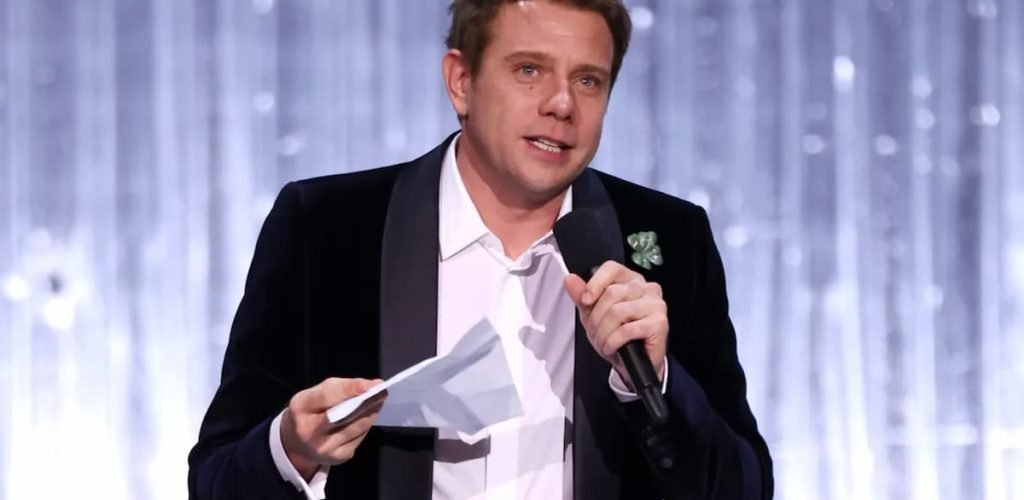
The headline moment belonged once again to Jonathan Anderson, who secured Designer of the Year for the third consecutive time—this year for his dual leadership at JW Anderson and Dior, where he made his official debut earlier in 2025. Accepting the award, Anderson spoke of the scale of the challenge and the collaborative force behind his work, singling out Dior CEO Delphine Arnault and the atelier teams.
A Designer in Constant Ascent
Anderson’s recognition underscored his evolving position as one of the defining voices in contemporary fashion. His tenure at Dior, still in its early phase, has already drawn attention for its architectural tailoring and narrative-driven silhouettes. At JW Anderson, his sharper, more exploratory aesthetic continues to influence younger designers and London’s creative landscape.
The dual award for both houses not only cements Anderson’s creative range but also signals a shift: the industry appears ready to embrace designers who can move fluidly between heritage maisons and experimental laboratories of style without losing coherence.
British Talent in Focus
The ceremony reinforced London’s role as an incubator of both craftsmanship and innovation.
- Sarah Burton, now at Givenchy, received British Womenswear Designer of the Year, a recognition that mirrors her ability to interpret couture lineage with precise, sculptural clarity.
- Grace Wales Bonner was honoured as British Menswear Designer of the Year, continuing her exploration of diaspora narratives and refined tailoring that bridges fashion and cultural scholarship.
These awards collectively marked a return to meticulous construction and intellectual depth within British fashion, balancing commercial viability with cultural storytelling.
New Voices: The Vanguard Award
Among emerging names, Dilara Fındıkoğlu won the Vanguard Award, spotlighting her provocative, historically charged approach to design. Her collections, often interpreted as allegories of power structures, have steadily grown in influence, aligning traditional craftsmanship with a rebellious, performative edge.
The other finalists—Aaron Esh, Feben, Steve O Smith, Tolu Coker and Torishéju Dumi—illustrated just how wide the spectrum of London’s new wave has become, spanning minimalist tailoring to conceptual performance-driven fashion.
Industry Pillars Honoured
The Awards also turned to those whose contributions extend beyond the runway:
- Brunello Cucinelli received the Outstanding Achievement Award, solidifying the legacy he built in Solomeo, the Umbrian village that anchors his philosophy of “humanistic capitalism.”
- Rei Kawakubo, Adrian Joffe and Dickon Bowden were recognised with the Isabella Blow Award for Fashion Creator, highlighting the enduring cultural impact of Dover Street Market and its disruptive retail model.
- A special recognition went to Delphine Arnault, reflecting her role in steering Dior’s strategic and creative evolution.
- The ceremony also celebrated 15 years of the BFC Fashion Trust and the 25-year milestone of Fashion East, with Lulu Kennedy and Raphaelle Moore acknowledged for nurturing talent that continues to shape global aesthetics.
A Cultural Crossroads
Beyond industry accolades, the event acknowledged the symbiosis between fashion and broader cultural production:
- Little Simz received the Cultural Innovator Award, embodying the convergence of music, fashion and storytelling.
- Kate Hawley was honoured as Costume Designer of the Year, reinforcing the importance of costume design in shaping visual imagination across cinema and theatre.
- A posthumous tribute celebrated Melanie Ward, whose editorial eye influenced a generation of stylists and photographers.
Why This Edition Matters
The 2025 Fashion Awards reflected an industry recalibrating itself. Creativity shared the spotlight with responsibility and long-term vision. From the rise of multidisciplinary designers to the renewed focus on craftsmanship and cultural literacy, the evening captured a sector moving away from rapid seasonal narratives and toward more deliberate, purpose-driven leadership.
The recurring theme—collaboration, both within ateliers and across creative fields—suggests where the next decade is heading. Fashion, more than ever, is defined not just by aesthetics but by the communities, dialogues and structures that sustain it.
A Stage for Continuity and Change
As the lights dimmed inside the Royal Albert Hall, the 2025 edition left a clear message: heritage and innovation are no longer opposites but partners. Whether in Anderson’s dual triumphs, Burton’s sculptural precision, or Fındıkoğlu’s uncompromising vision, the awards portrayed a world where fashion’s future lies in bridging past traditions with new creative freedoms.
The year’s winners will undoubtedly shape discussions, trends and expectations throughout 2026—and their work will likely form the backbone of the next chapter of an industry that thrives on reinvention.