
In Times Square, under the hard electronic glare of New York billboards, Gucci did not look like a house quietly entering a new era. It looked like a brand staging an occupation. The screens went dark, then came back to life with the familiar grammar of desire: logo, light, velocity, celebrity, spectacle. Around it, the city kept doing what New York always does best: pretending not to be impressed.
The Cruise 2027 runway shows have landed with the precision of a global power move. Chanel returned to Biarritz, Dior chose Los Angeles, Gucci took Times Square, Louis Vuitton looked toward New York, Hermès prepared a second act in Los Angeles, and Max Mara moved the conversation to Shanghai. The calendar may still call them cruise collections, but the name feels almost quaint now, a relic from another fashion century, when resort meant linen, trunks, yachts and women who had somewhere warm to disappear.
Cruise today is not about holidays. It is about territory.
The Cruise 2027 runway shows are no longer between-season collections
For years, cruise collections occupied a polite space between the major fashion weeks. They were commercially useful, easier to wear, often more relaxed than the main seasonal proposals. Then the luxury houses understood something obvious and slightly brutal: a collection shown outside Paris or Milan could speak louder than a show staged inside the usual architecture of fashion.
A runway in Biarritz is not just a runway. It drags Chanel back to a founding myth: sea air, sport, the liberation of the body, Coco Chanel’s early rejection of decorative confinement. A Dior show at LACMA is not simply a Californian detour. It places the house inside the mythology of Hollywood, where fantasy, image-making and clothes have always shared the same dressing room. Gucci in Times Square does something more abrasive: it walks straight into mass visibility and refuses the comfort of rarefied taste.
That is the first lesson of Cruise 2027. Luxury no longer wants only the correct audience. It wants the correct backdrop.
The city has become part of the collection. The location now carries as much meaning as the silhouette. Biarritz softens Chanel into memory. Los Angeles turns Dior into cinema. New York gives Gucci noise, friction and the faint smell of commerce. Shanghai, where Max Mara is expected to show, signals another axis entirely: global appetite, cultural negotiation, the market as stage.
Fashion used to travel to seduce clients. Now it travels to write its own geography.
Gucci in Times Square: Demna chooses the loudest room
Demna’s first cruise statement for Gucci did not attempt discretion. That would have been ridiculous, and possibly dishonest. Gucci has never been a house of perfect silence. At its best, it understands desire as a crowded street: polished, vulgar, elegant, fake, aspirational, deeply Italian and deeply global at once.
Times Square sharpened that contradiction. It is one of the least subtle places on earth, which made it strangely exact for a brand trying to reconnect with public visibility after years of aesthetic turbulence. Demna built the show around New York archetypes: the office commuter, the downtown skater, the woman wrapped in fur, the party girl, the polished figure moving between money and performance. The casting of the city mattered as much as the clothes.
Accessories carried much of the message. Backpacks, pointed boots, exaggerated outerwear, hard-edged shapes: this was Gucci edited through the lens of urban survival rather than aristocratic fantasy. The house codes appeared, but not as museum pieces. They were pushed into the street, made slightly tougher, slightly colder, less interested in being loved by everyone.
Gucci debuted its Cruise ’27 collection in Times Square last night. Feather-embellished gowns, floral-lined fur coats, tube tops with trousers. Here are the highlights… Video by @voguerunway
The irony is clear enough. A luxury brand stages a show in the most commercial square in America and calls it style. Yet the move works because Gucci has always known that taste becomes interesting when it risks contamination. Too clean, and Gucci loses its pulse. Too chaotic, and it becomes costume. Demna’s task is to keep the tension alive without letting the brand collapse into caricature.
Times Square gave him the right enemy: too much light, too much signage, too much everything. Gucci looked almost disciplined against it.
Dior in Los Angeles: Jonathan Anderson enters through the dream factory
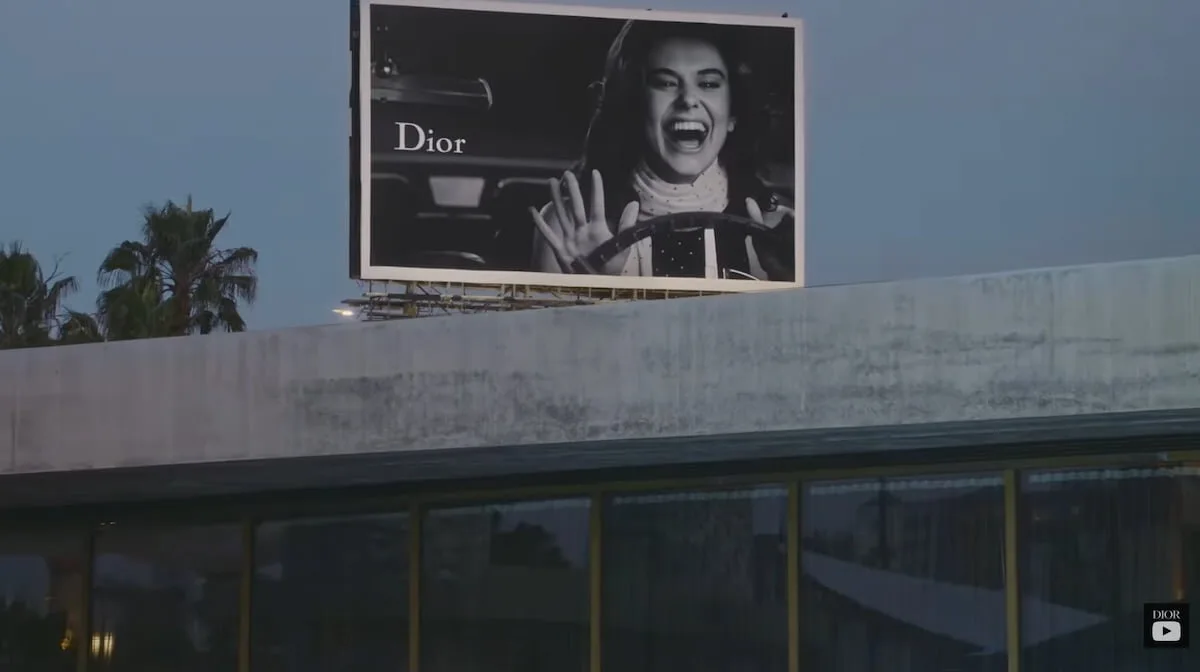
Dior’s Cruise 2027 show in Los Angeles carried a different charge. Jonathan Anderson arrived not through severity, but through fantasy. At LACMA, with vintage Cadillac references and the long shadow of Hollywood nearby, Dior stepped into a place where clothes have never been just clothes. They are evidence of transformation.
The link between Dior and cinema is not decorative. Christian Dior dressed women whose public image depended on the controlled construction of femininity: Marlene Dietrich, Marilyn Monroe, Elizabeth Taylor. Hollywood understood Dior because Dior understood the dream as a discipline. Glamour was never natural. It was built, lit, fitted, repeated.
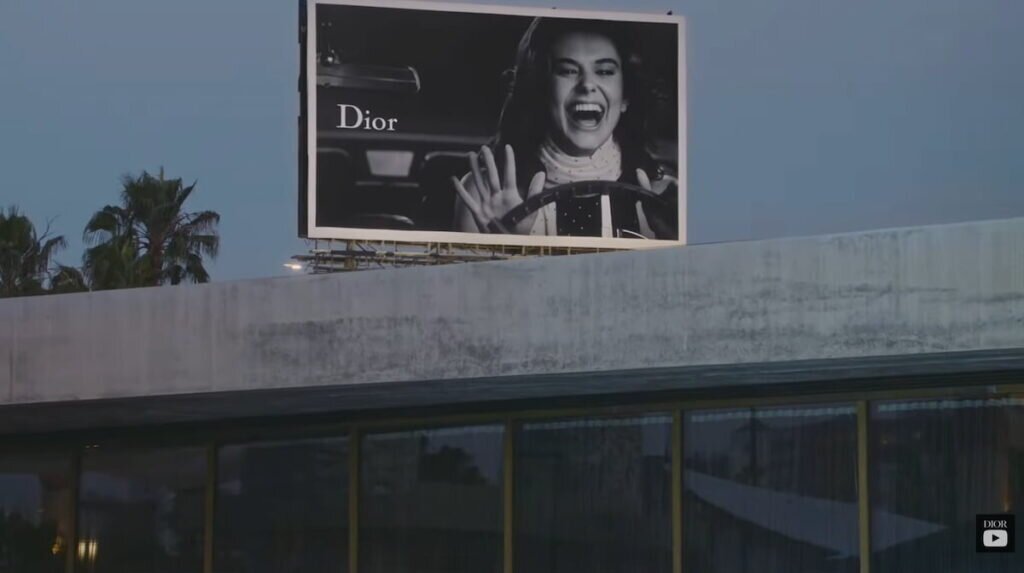
Anderson’s Dior seems to know this. Sequins, floral gestures, flashes of red, feathered headpieces, men’s and women’s looks presented together: the collection did not treat heritage as a locked archive. It treated it as a studio lot, full of props that can be rearranged without losing their charge.
The most interesting part is the slight artificiality. Dior in Los Angeles does not need to pretend that dreams are innocent. The dream is manufactured. That is the point. California poppies, cinematic styling, Ed Ruscha references, typographic shirts, the presence of art and screen culture: Anderson appears less interested in preserving Dior untouched than in testing how much narrative the house can absorb.
This is where Cruise 2027 becomes revealing. The new creative directors are not merely presenting clothes. They are negotiating permission. How much can Chanel move? How far can Gucci stretch? How theatrical can Dior become before elegance starts to slip into set design?
The answer, for now, seems deliberately unstable.
Chanel in Biarritz: freedom, but with a mirror behind it
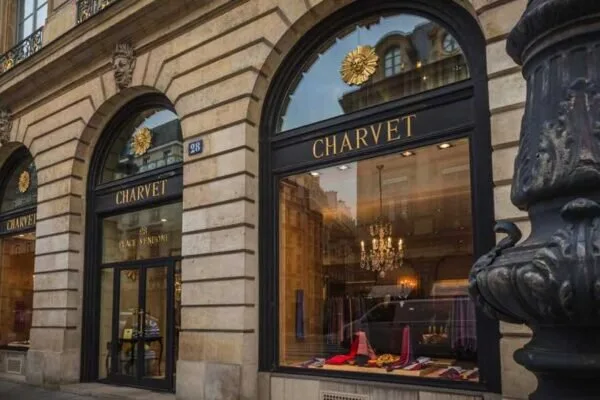
Chanel’s return to Biarritz carried the quietest symbolism and perhaps the most demanding one. Matthieu Blazy chose a place embedded in the house’s origin story, a seaside town linked to movement, escape and the early codes that freed women’s bodies from the stiffness of the previous century.
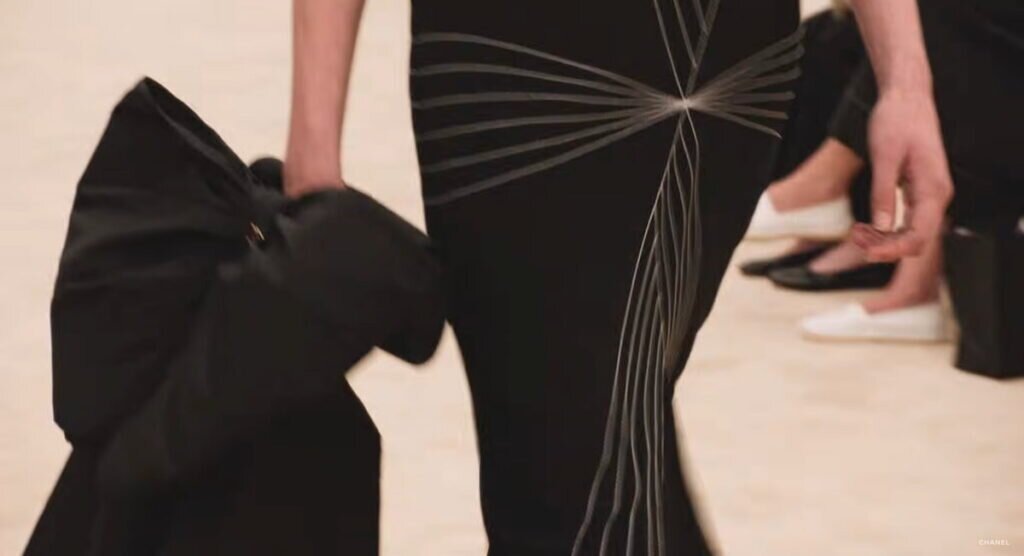
That phrase, freedom of the body, has become so associated with Chanel that it risks losing its edge. Yet in Biarritz it regains some force. The sea, the swimming caps, the jersey memory, the softened proportions, the black dress with loosened volume, the striped knit, the beach bag made almost absurdly large: all of it circled the same idea without turning it into a lecture.
Blazy’s Chanel is not austere. It has mischief. The bare-foot “heel cap” accessories, the mermaid-like paillettes, the swimwear references filtered through tailoring: these are not nostalgic gestures in the strict sense. They are reminders that Chanel was modern before modernity became branding.
The risk, of course, is reverence. Chanel has one of the most over-managed mythologies in fashion. Every return to Gabrielle Chanel, every mention of jersey, Biarritz, freedom, movement, can become a polished loop. Blazy’s challenge is to keep the archive from behaving too well.
The most persuasive looks were those that allowed imperfection into the frame: a proportion slightly off, a bag too large, a seaside reference made strange rather than pretty. Chanel does not need another respectful homage. It needs friction with its own legend.
The American turn: why luxury is looking west
The strong American presence in the Cruise 2027 calendar is not accidental. Gucci in New York, Dior in Los Angeles, Louis Vuitton also linked to New York, Hermès preparing a Los Angeles chapter: luxury is making a visible claim on the United States at a moment when attention, celebrity and spending power still concentrate there.
The old European hierarchy remains, but it no longer feels sufficient. Paris may confer legitimacy. Milan may carry craft and industry. The United States supplies scale, spectacle and the celebrity machine with almost indecent efficiency. A-list guests are not a decorative extra in these shows. They are part of the distribution system.
The fashion image now travels faster than the garment. A model turning under Times Square screens, a Dior look moving through a Hollywood-coded set, a Chanel silhouette framed against the Atlantic grey: these moments are designed for circulation. The runway is still physical, but its true life begins once the images leave the room.
That creates a strange inversion. Cruise collections once suggested escape from the city. Cruise 2027 moves straight into the loudest cities and asks them to amplify the clothes.
Vintage logic inside new luxury
For Vintage Italian Fashion, the most interesting part is not the spectacle itself. It is the way every major house is now reaching backward while pretending to move forward.
Chanel returns to Biarritz. Dior reopens Hollywood. Gucci leans on New York history, from Fifth Avenue prestige to street-level imitation. Even when the clothes look contemporary, the emotional machinery is archival. Luxury is not abandoning the past. It is editing the past for global consumption.
That does not make the collections less relevant. It makes them more revealing.
The vintage eye notices what the trend cycle often misses: the strongest fashion references survive because they were built around a real social need. Chanel’s jersey was not only aesthetic. Dior’s postwar dream was not only decorative. Gucci’s American mythology was never only about handbags. These houses endure because their codes were attached to bodies, cities, ambitions, anxieties.
Cruise 2027 confirms that the archive has become the most valuable material in luxury. Not fabric. Not novelty. Memory.
The houses know this. Their new creative directors know it even more sharply. A debut cruise show is not a seasonal exercise; it is a public test of inheritance. The designer must prove that the brand can remember itself without becoming trapped in its own portrait.
The contradiction at the heart of Cruise 2027
Here is the tension nobody can fully smooth out: the more luxury insists on freedom, travel and escape, the more controlled everything becomes.
The destination is curated. The guest list is engineered. The city is framed. The archive is activated. The celebrity presence is calibrated. Even spontaneity arrives with excellent lighting.
And yet, sometimes, fashion still cuts through the machinery. A black Chanel dress with a loosened waist. A Dior flower that looks almost too theatrical to behave. A Gucci boot sharp enough to make nostalgia irrelevant. These are the moments worth watching, because they escape the press release and enter the eye.
Cruise 2027 is not a soft season. It is a map of power drawn in resort clothing. The houses are not asking where women will go on holiday. They are asking which cities, myths and memories can still make luxury feel alive.
The answer is moving fast, under billboards, through museum courtyards, beside grey water, toward the next carefully chosen stage.
Join the Vintage Italian Fashion community for sharp fashion analysis, vintage culture and editorial selections.
https://vintageitalianfashion.substack.com/
https://vintageitalianfashion.com/