
Have you ever wondered when the Met Gala stopped being a fashion event—and quietly became something else?
Amy O’Dell has. And in her recent analysis, she frames a transformation that feels less like evolution and more like a change of ownership.
How did the Met Gala 2026 become a status marketplace for tech billionaires?
In 2003, the Met Gala still resembled a closed circle. It was curated by Anna Wintour, shaped alongside Tom Ford and Nicole Kidman, with Gucci as sponsor. The theme—“Goddess: The Classical Mode”—set the tone: fashion as heritage, narrative, aesthetic continuity.
A ticket cost $3,500. Expensive, yes. But still within reach for designers, editors, collectors, and a certain kind of patron who understood fashion as language.
Fast forward to 2026.
A single ticket: $100,000.
A table: $350,000.
And the guest list tells a different story. Not ateliers, not editors, not even traditional patrons—but companies. OpenAI, Meta, Snap Inc..
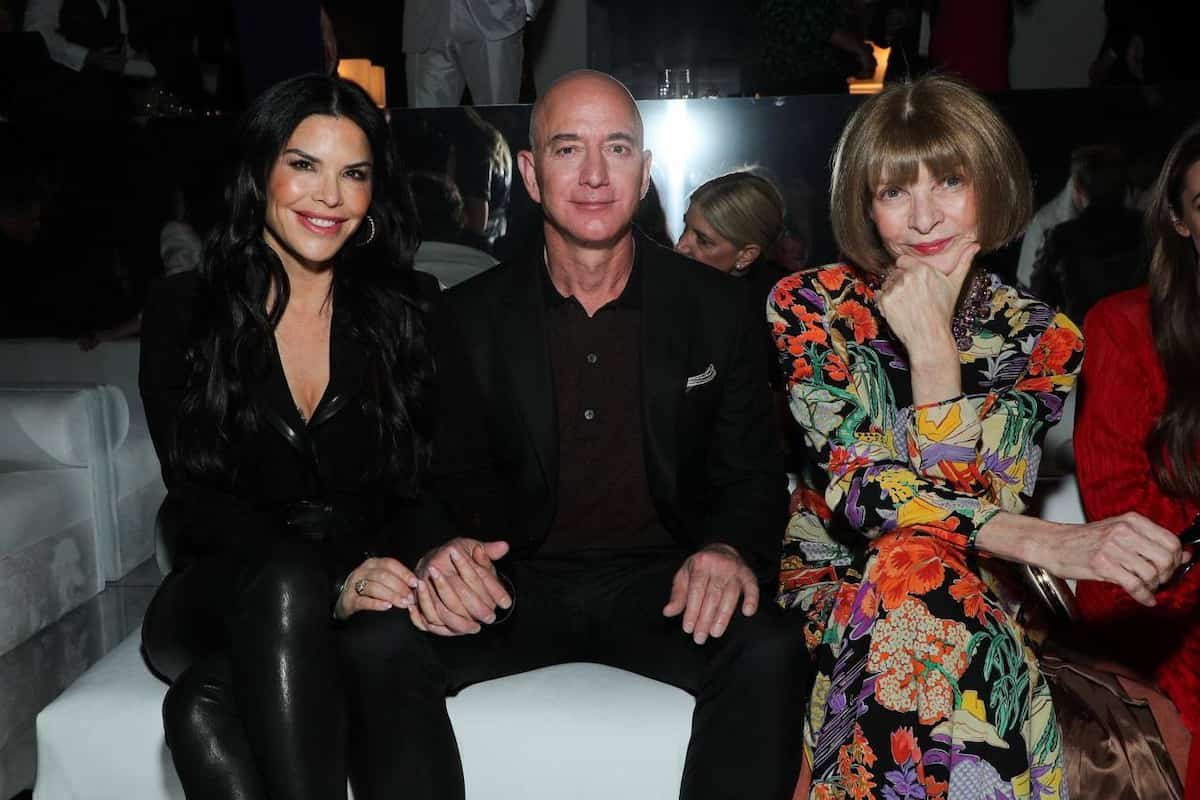
The co-chairs? Jeff Bezos and Lauren Sánchez.
At that point, the shift stops being subtle. The Met Gala no longer reflects fashion power. It reflects capital.
Why are tech companies buying into the Met Gala?
O’Dell’s argument is direct: what tech companies are purchasing is not visibility. It’s legitimacy.
Fashion still holds something Silicon Valley doesn’t fully control—cultural authority. The ability to define what feels desirable, relevant, aspirational. That invisible currency that turns objects into symbols.
Buying a table at the Met Gala means entering that conversation.
It means proximity to designers, to editors, to the people who shape taste. It means being photographed not as disruptors, but as participants in culture.
And there’s precedent.
- Amazon sponsored the “Schiaparelli and Prada: Impossible Conversations” exhibition in 2012
- Yahoo appeared in 2016
- Apple followed in 2017
- TikTok invested in 2024
- OpenAI technologies were integrated into “Sleeping Beauties: Reawakening Fashion”
Bezos isn’t breaking the system. He’s scaling it.
Is the Met Gala still expensive—or just expensive for everyone else?
Here’s where O’Dell’s comparison lands with uncomfortable clarity.
In 2025, the Met Gala raised $31 million.
For an average American household earning $80,000 per year, that number feels astronomical. For Bezos, it translates to roughly the equivalent of $10.
Even covering the entire production—estimated at $6 million—would feel like spending about $2.
The implication is hard to ignore: the Met Gala isn’t expensive for the ultra-rich. It’s cheap.
A remarkably efficient way to buy access to cultural capital.
Is fashion losing control of its own most important event?
This is the real tension in O’Dell’s argument.
The Met Gala once functioned like a private club—a space where fashion insiders, celebrities, and donors operated within a shared understanding of taste. Not perfect, not democratic, but coherent.
Now it resembles something closer to a marketplace of influence. Access is no longer defined by contribution to fashion, but by financial capacity.
And when capital replaces authority, something shifts.
The question isn’t whether billionaires should be there. It’s whether they bring anything that fashion itself recognizes as valuable.
Because fashion has always been selective. Not in terms of money—but in terms of taste.
Will the Met Gala actually lose its “cool” factor?
O’Dell suggests a future where the Met Gala risks becoming uncool—where the presence of capital without cultural authority erodes its relevance.
It’s a compelling argument. It’s also, probably, overstated.
Because the ultra-rich are not chasing isolation. They are chasing proximity.
They don’t just want status. They want to share it—with the right people.
That’s why they sit front row at Prada.
Why they invest in experimental materials, sustainability labs, new textile research.
Why they invite models like Vittoria Ceretti into their private worlds.
They are not trying to replace fashion. They are trying to enter it.
And that changes the equation.
Fashion doesn’t disappear when money arrives. It adapts, absorbs, and—when necessary—redefines the rules of belonging.
The real shift isn’t about money
The Met Gala has always been about power. What changed is the type of power that gets you in.
From taste to capital. From cultural production to financial access.
Still, one thing hasn’t moved.
Coolness remains a closed system. It cannot be bought outright. It can only be negotiated, slowly, through proximity, validation, and time.
And that’s why the Met Gala isn’t collapsing. It’s recalibrating.
The billionaires aren’t replacing fashion.
They’re paying to sit at its table—and hoping someone still invites them back next year.
Join our Community:
https://t.me/vintageitalian
https://vintageitalianfashion.substack.com/