
The most interesting object in luxury is not always the one designed to be noticed.
Sometimes it is a shirt.
Not a logo shirt, not a seasonal novelty, not an item built around spectacle. A proper shirt: cut close enough to the body to reveal its intelligence, made from fabric that behaves well, finished with a collar that knows how to sit under a jacket, and constructed with the kind of discipline that only becomes visible after repeated wear.
That is why Chanel’s acquisition of Charvet matters beyond the immediate business headline.
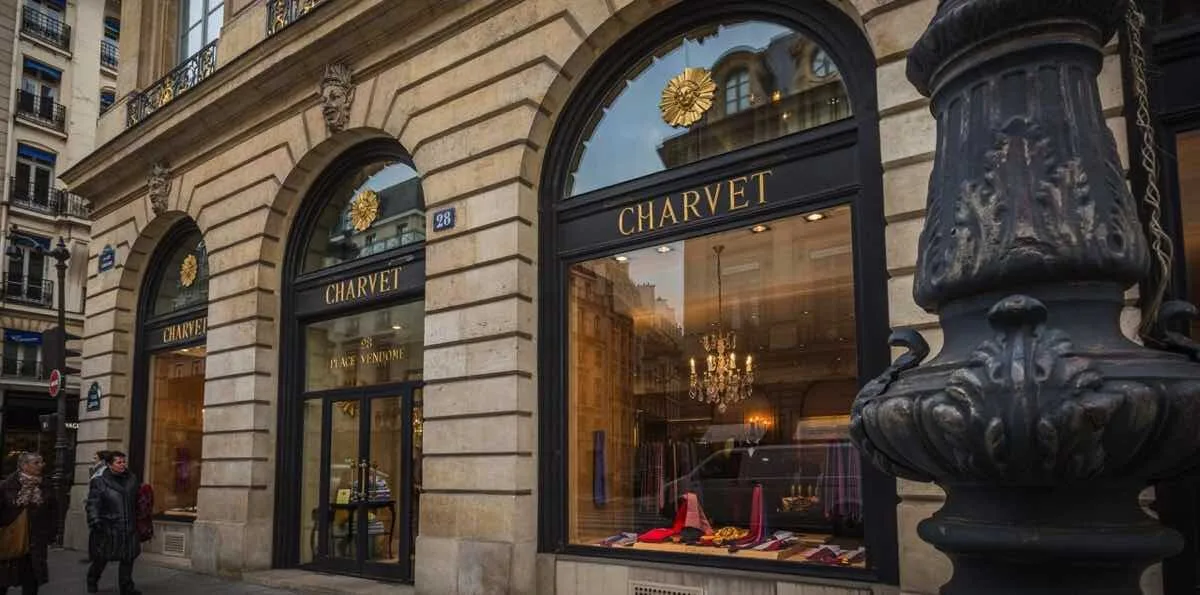
On paper, the move brings a historic Paris shirtmaker into Chanel’s wider craft ecosystem. Charvet, founded in 1838, is often described as the first dedicated shirtmaker in the world. It is associated with Place Vendome, bespoke shirting, private clients, carefully held techniques and a form of luxury that does not need to announce itself from across the room.
But for vintage fashion, the story is more useful if we read it through the garment itself.
The shirt has become important again because it shows what many louder luxury objects cannot: proportion, fabric, repetition, memory and use.
Why a Shirt Can Be More Revealing Than a Dress
A dress can carry an image.
A bag can carry a name.
A shoe can carry a silhouette.
A shirt carries fit.
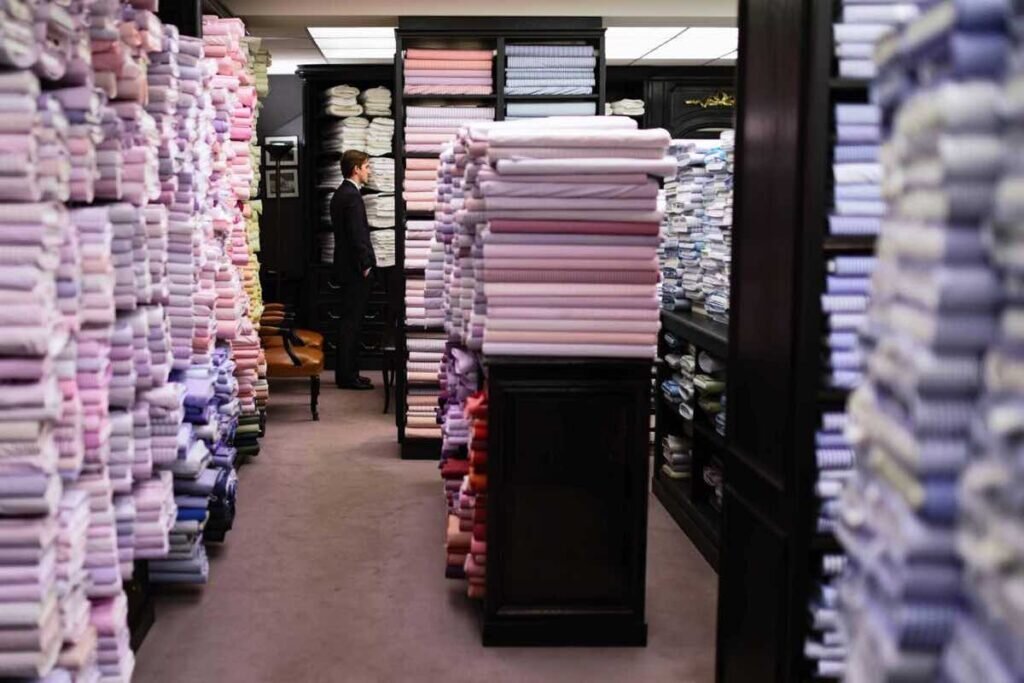
That makes it less forgiving. A good shirt is not convincing because it looks expensive in a photograph. It is convincing because the collar keeps its line, the shoulder sits where it should, the placket remains calm, the cuff has weight, the fabric does not collapse into limpness and the whole object continues to behave after laundering, pressing, movement and time.
This is why shirtmaking belongs so naturally to the language of vintage.
Vintage buyers know that condition is never only surface. A garment can look clean and still be tired. It can have no obvious stain and still have lost its structure. It can carry a prestigious label and still fail at the points where the body needs support.
A shirt exposes all of that quickly.
The collar tells you whether the garment still has authority.
The cuffs tell you how it was worn.
The underarm area tells you how much life remains.
The buttons, seams and buttonholes tell you whether the piece was made to last or merely made to resemble something lasting.

The Quiet Power of Charvet
Charvet’s importance is not simply that famous people wore it.
That kind of fact is easy to turn into decorative history. A more useful point is that the house built value around an object that many wardrobes treat as basic. The shirt, in Charvet’s language, is not a neutral underlayer. It is a technical garment.
That is a very different idea from the modern habit of treating quiet luxury as a colour palette.
Quietness, in this case, is not beige.
It is precision.
It is the distance between a collar that has been drawn with purpose and one that simply fills space. It is the exact relationship between cloth and body. It is the difference between a sleeve that twists and a sleeve that falls. It is why a white shirt can be either forgettable or almost architectural.
For collectors and vintage readers, this is the part worth keeping.
The best vintage pieces often ask for a slower eye. They are not always the pieces that photograph most dramatically. They are the garments that reveal themselves when you handle them: dense cotton, fine poplin, mother-of-pearl buttons, hand-finished details, proportionate collars, seams that still lie flat, cuffs that have not surrendered.
Why Chanel Wanted the Craft, Not Only the Name
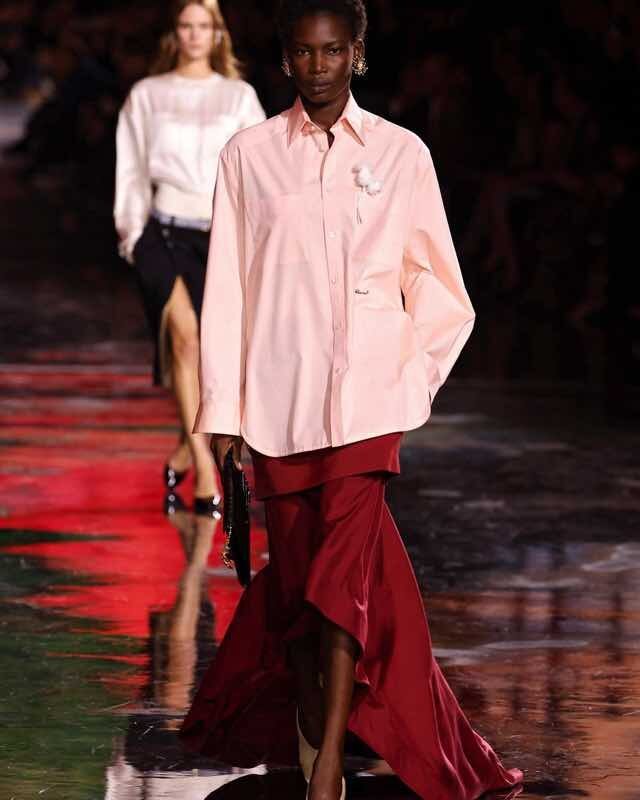
The acquisition followed a recent runway collaboration under Matthieu Blazy, but the logic is larger than one show.
Luxury houses have been buying or supporting specialist suppliers for years because craft has become a strategic asset. Fabric, embroidery, feathers, pleating, leatherwork, shoes, buttons, knitwear and shirtmaking are not decorative extras. They are the infrastructure behind image.
When a house controls or protects a rare skill, it is not only buying capacity.
It is buying continuity.
This is the point vintage fashion understands instinctively. A garment survives when the knowledge behind it survives. Once a particular way of cutting, finishing, pressing, sourcing or fitting disappears, it cannot be replaced by a marketing story. It has to be rebuilt through hands, time and apprenticeship.
Charvet’s value is therefore not only archival.
It is operational.
It still knows how to make the kind of garment that can discipline a silhouette without becoming rigid. That matters to Chanel because Blazy’s direction has already shown interest in clothes that feel lived in, intelligent and materially specific rather than purely iconic.
The Chanel Connection Is Also a Wardrobe Story
The relationship between Chanel and Charvet is often framed through biography: Gabrielle Chanel, Boy Capel, borrowed shirts, masculine wardrobes entering women’s dress.
That history is real, but it should not be reduced to romance.
The more important lesson is wardrobe grammar.
Chanel understood early that masculine clothing could offer women a different kind of ease: not costume, but movement; not softness as decoration, but comfort as authority. A borrowed shirt, when worn by a woman, can change the meaning of both the shirt and the body inside it.
That is still a modern idea.
It also explains why the Charvet acquisition does not feel like a nostalgic footnote. The shirt is one of the garments through which twentieth-century fashion renegotiated gender, elegance and everyday formality. It sits between public and private, work and leisure, discipline and intimacy.
In vintage, this makes shirts especially interesting.
They can be anonymous and important at the same time.
They can carry no visible logo and still reveal a culture of making.
How to Read a Vintage Shirt Now
If the Chanel-Charvet story teaches anything useful, it is that a shirt deserves more attention than it usually receives.
When buying vintage or second-hand shirting, start with fabric.
Good cotton does not need to be heavy, but it should have life. It should not feel papery, greasy, brittle or exhausted. Poplin should feel smooth and controlled. Oxford can be more textured. Twill may have more drape. Linen should wrinkle with character, not collapse into shapelessness.
Then look at the collar.
A collar does not have to be stiff. It has to make sense. Check whether the points sit evenly, whether the interlining has bubbled, whether the fold line is clean and whether the collar shape suits the period of the shirt rather than pretending to be timeless.
Look at the cuffs.
They usually show wear before the body of the shirt does. Fraying, yellowing, thinning and broken stitching are not always fatal, but they change value and usability.
Open the shirt and inspect the seams.
The inside often tells a more honest story than the outside. Loose threads, warped side seams, weak armholes and badly altered darts can make an elegant shirt difficult to wear.
Finally, look at proportion.
This is where vintage becomes practical. A beautiful shirt that cannot work with today’s trousers, skirts or jackets may remain interesting, but it may not be useful. The right vintage shirt should be able to enter a contemporary wardrobe without needing a full period costume around it.
The Real Luxury Is Continuity
Chanel buying Charvet is not only a story about ownership.
It is a story about what luxury now needs in order to remain credible.
Not more noise.
More knowledge.
Not only heritage as narrative.
Heritage as method.
For vintage fashion, the message is clear: pay attention to the pieces that carry technique quietly. A shirt may not perform like a runway look, but it can teach the eye almost everything that matters about cloth, cut and use.
The future of heritage may not begin with the spectacular dress.
It may begin with the shirt that still knows how to hold its shape.
Join our Community: