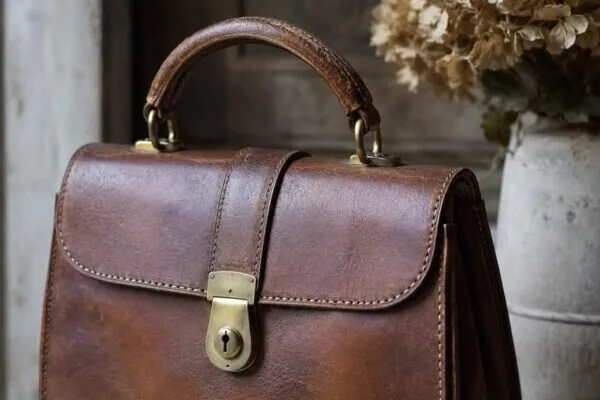

In 1980, Richard Gere walked across a screen carrying a soft, woven leather clutch, and by the time American Gigolo had finished playing in theatres, that clutch — Bottega Veneta’s Intrecciato — had become something closer to a signature than an accessory. Four decades on, the same weave is back in dialogue with new silhouettes from the maison’s own archive. It is a useful place to start, because it says something that rarely makes it into a shopping guide: a bag becomes iconic not by being new, but by being recognizable.
That is, in effect, the story running through this season’s collections from the major luxury houses. From Hermès’s unshaken classicism to Dior’s sculptural new shapes to Dolce&Gabbana’s theatrical, baroque register, the throughline is individuality — not as a marketing word, but as a design constraint each house is solving differently. For anyone trying to decide what to actually buy this season, that distinction matters more than any single “it-bag” headline.
Is there such a thing as a “perfect bag”?
According to the piece, no — and that is the point. There is only the bag that resembles the person carrying it. Every maison is chasing the same idea of individuality, but each rewrites its own codes in a different way: some through restraint and discretion, others by making proportions, materials and craftsmanship carry the argument instead. Knowing which of these two paths a house has chosen tells you, practically, what you’re paying for.
Hermès and Bottega Veneta: two ways of being timeless
Hermès’s approach is evolution without alteration. The Kelly Retourné Clou de Forge, crafted in Veau Volupté calfskin, borrows equestrian details — the “clou de forge,” or forged stud, among them — without ever compromising the bag’s essential elegance. It is a house that keeps distinguishing itself by not changing very much.
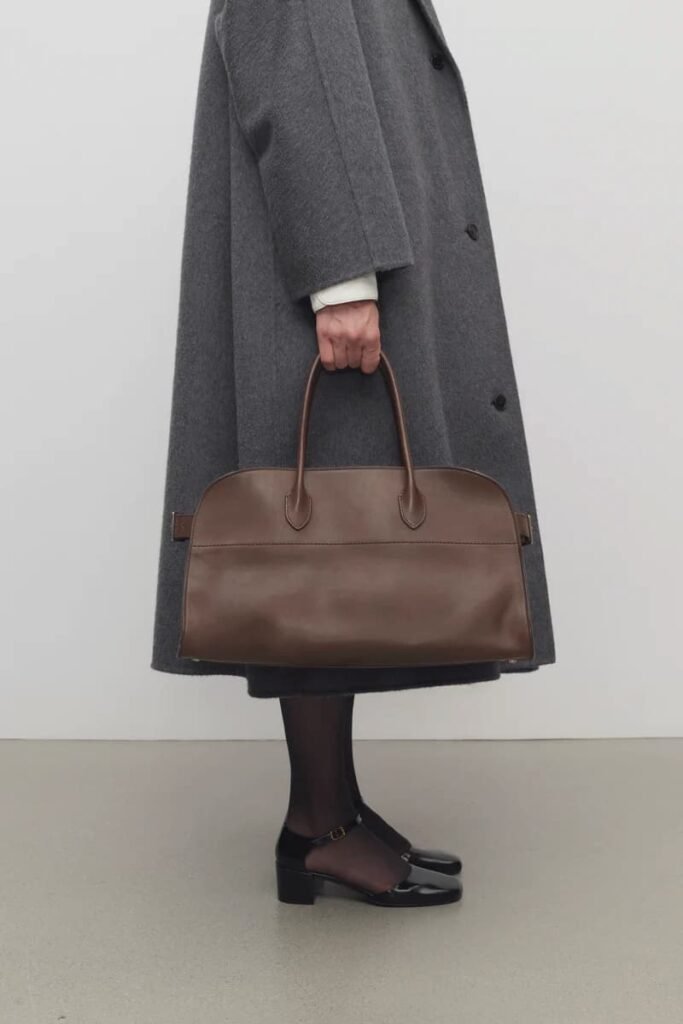
Bottega Veneta takes the opposite route to a similar destination. Rather than a status object, the bag is framed as something to form a personal bond with — an object to live with and to keep, more than to display. The Lauren 1980 model is cited as the clearest expression of that philosophy: quality of craftsmanship and softness of form matter more here than instant recognizability, and the bag is meant to be rediscovered over years of use rather than admired once.
Practical read: if you want a bag that photographs immediately, Hermès’s route rewards you. If you want one that gets better with wear and doesn’t shout its own name, Bottega Veneta’s philosophy is the one to look for — in that house or any other working the same way.
Ferragamo and Dior: evolution versus sculpture
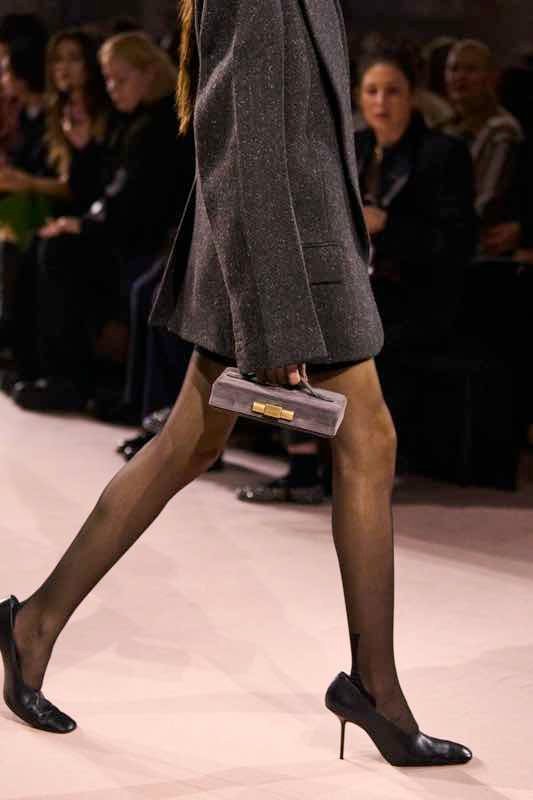
Ferragamo, too, favors evolution over revolution. The new Hug East-West keeps the belt detail that reads like an embrace around the bag, but slims the proportions into something more essential — the same idea of concentration, expressed with less.
Dior moves differently. Under Jonathan Anderson, the house translates some of its most iconic codes — quilting, chain details, silhouette — into the new Cigale bag, described as sculptural and rigorous, almost a small exercise in haute couture construction rather than an everyday accessory redesigned.
Practical read: this is the difference between a bag built to be worn without thinking about it, and one built to be looked at. Neither is wrong; they simply answer different daily needs, and it’s worth being honest with yourself about which one you actually want to live with.
Fendi’s Baguette and Dolce&Gabbana’s Sicily
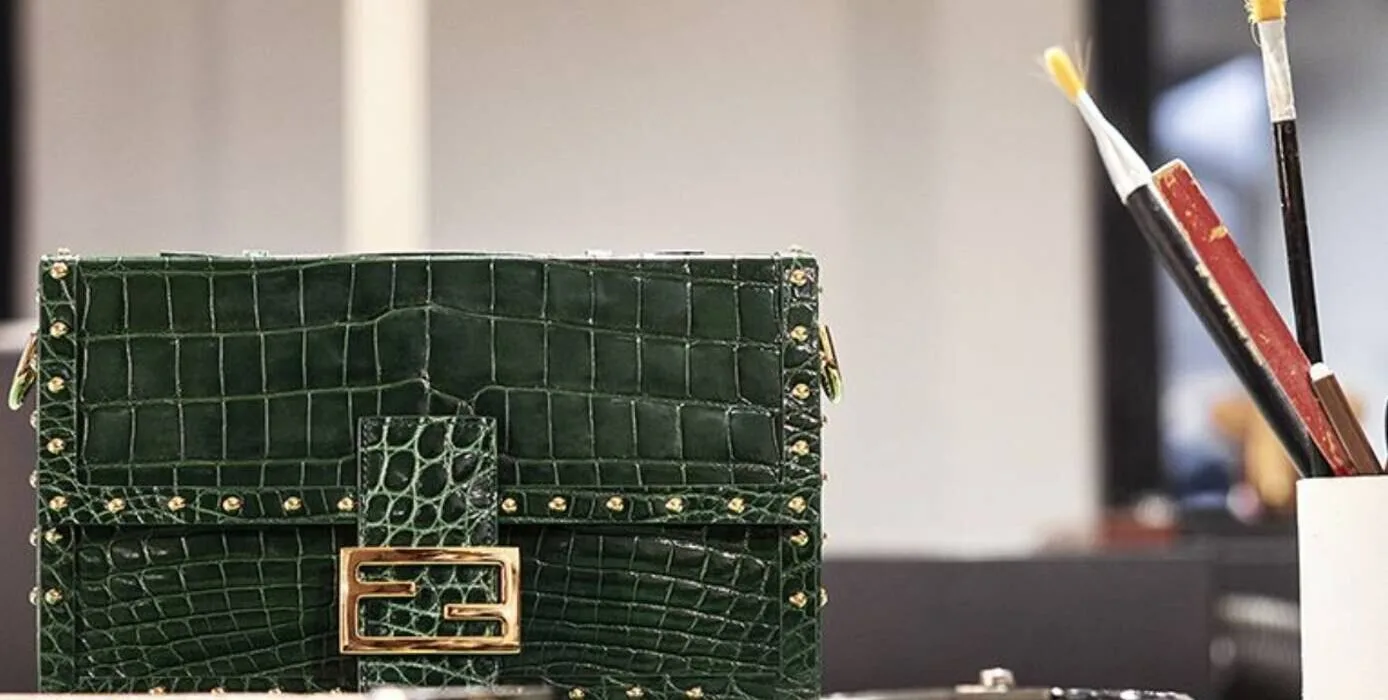
Fendi puts the Baguette back at the center of its offering — a shape designed originally to break the minimalism of the 1990s, and still, decades later, a symbol of expressive freedom. Its own tagline still does the explaining better than any new copy could: “It’s not a bag, it’s a Baguette.”
Dolce&Gabbana, for its part, turns to Sicily and to the theatrical, baroque register that has always defined the brand — vivid red, black velvet, precious embroidery, shining laminate finishes building an island-inspired imaginary, set against classic silhouettes and occasional, deliberately surprising details.
The practical season: Prada’s Bonnie and the return of raw material
If the first half of the story is about identity, the second is about how a bag actually behaves day to day — and here Prada’s new Bonnie bag is the clearest case study.
Bonnie is built around clean geometry and an unshowy elegance, and this season it adds a leather-and-suede version alongside two materials carrying real historical and sociological weight: raw linen and washed denim. It comes in at least three sizes — small hand or shoulder versions in shades including palissandro, avio, argilla, travertino and corda, through to bags built for people who need to travel lighter. The silhouette is elongated, the handles thin, designed to stay comfortable in movement from morning to evening.
The construction reportedly runs through at least fifteen separate steps, visible in details studied down to the millimeter: the band framing the zip closure, the passants and buckles that echo a belt fastening as much as decorate the bag, and the side seams cut to adapt the shape to whatever it’s actually carrying. The leather finishing is done by hand, polished to a smooth surface rather than a glossy one.
On materials specifically, the raw linen is worked to preserve its natural texture and hand-painted with artisanal pigments, so each piece carries slight, deliberate variation. The washed denim, meanwhile, is finished through an artisanal treatment that keeps the fabric soft and almost fluid rather than stiff.
Tip furbo: when you’re evaluating a bag built around linen or denim rather than leather, the giveaway of real craftsmanship isn’t the fabric itself — it’s the finishing. Run a finger along the seams and the zip surround: hand-finished pieces show slight, non-uniform texture; mass-produced ones look mechanically even.
Emporio Armani: the case for buying for longevity, not for the season
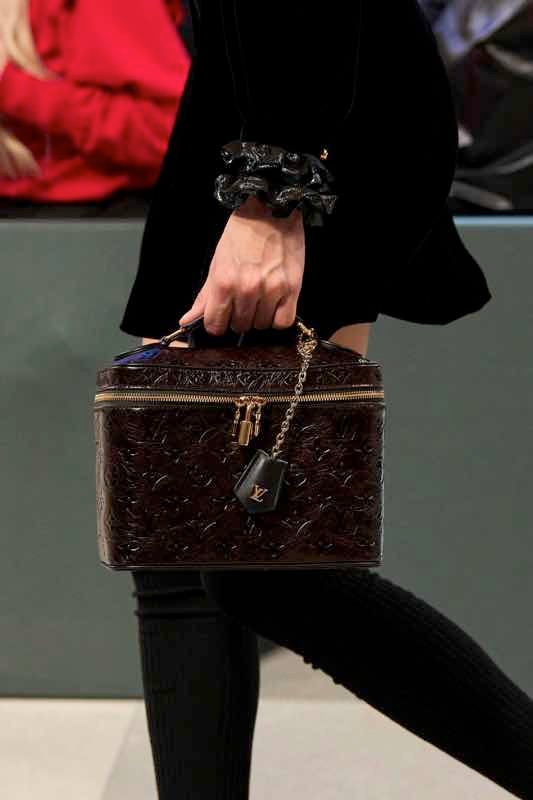
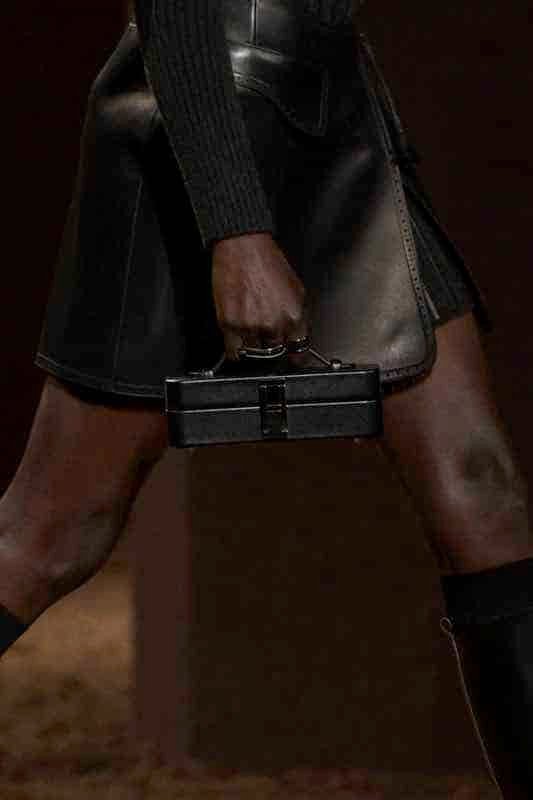
The other practical lesson in this round of collections comes from Emporio Armani, marking 1981 — the year the house itself, and its first family of bags, were born — with a new accessories line. The design brief here is explicitly not trend-chasing: soft shapes, measured detail, an aesthetic built to enter a wardrobe naturally and stay there.
The line leans on versatility — hobo, tote, and hand-and-shoulder models with a geometric patina — unified by an origami-inspired fold that breaks up the surface discreetly rather than decoratively. Hardware details, including a moschettone clasp reminiscent of jewelry, and small charms add a finishing touch without overwhelming the design. The palette stays within Armani’s known wardrobe colors — black, cuoio, and taupe — chosen specifically to be easy to combine and to outlast a single season.
Lo sapevi? The presence of a fold, a hardware detail, or a stitching pattern repeated consistently across a whole collection — rather than on one hero piece — is usually a signal that a house designed the line for everyday rotation, not for a single viral moment.
What this actually tells a buyer
None of these houses are describing the same bag, and none of them are trying to. What connects Hermès’s restraint, Bottega Veneta’s intimacy, Dior’s sculptural ambition, Fendi’s nostalgia, Dolce&Gabbana’s theatre, Prada’s material honesty and Armani’s quiet longevity is that each has picked one argument and built the whole object around it. The useful question, this season, isn’t “which bag is the trend.” It’s which of these arguments you actually want to carry.
“It’s not a bag, it’s a Baguette.” Twenty-five years on, Fendi’s own line about itself still says, better than most trend forecasting, what a season of bags is really arguing over: not fashion, but identity.
Join our Community: