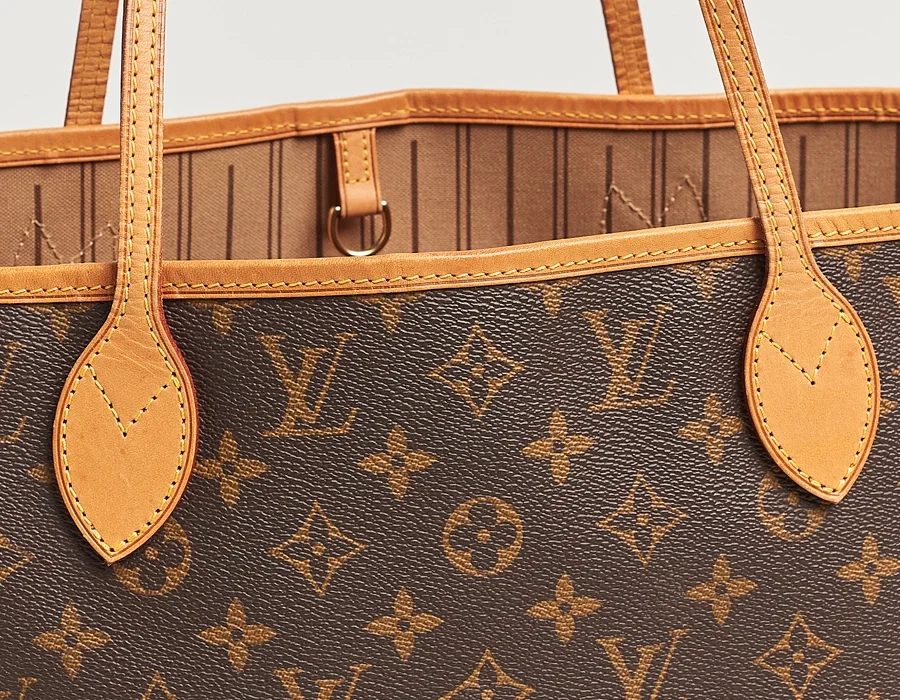

There’s a strange moment that happens in almost every vintage market. You spot a faded brown canvas bag from across the room — maybe half-hidden under old denim jackets or tangled silk scarves — and before your brain fully registers it, your eyes already know what it is.
The Louis Vuitton Monogram doesn’t ask for attention anymore. It doesn’t need to.
At 130 years old, the famous LV pattern has become something rarer than a logo: a visual reflex. Recognizable in airports, flea markets, rap videos, old family photographs, and museum exhibitions alike. Few fashion symbols have survived this long without becoming irrelevant, ironic, or exhausting.
And yet the Monogram remains exactly where luxury culture keeps circling back.

Why was the Louis Vuitton Monogram created in the first place?
The irony sits at the center of the story.
The Monogram was born in 1896 as protection against counterfeit products. Georges Vuitton, son of founder Louis Vuitton, needed a way to distinguish the Maison’s trunks from the growing wave of imitations flooding Paris.
What emerged wasn’t simply branding in the modern sense. It was visual armor.
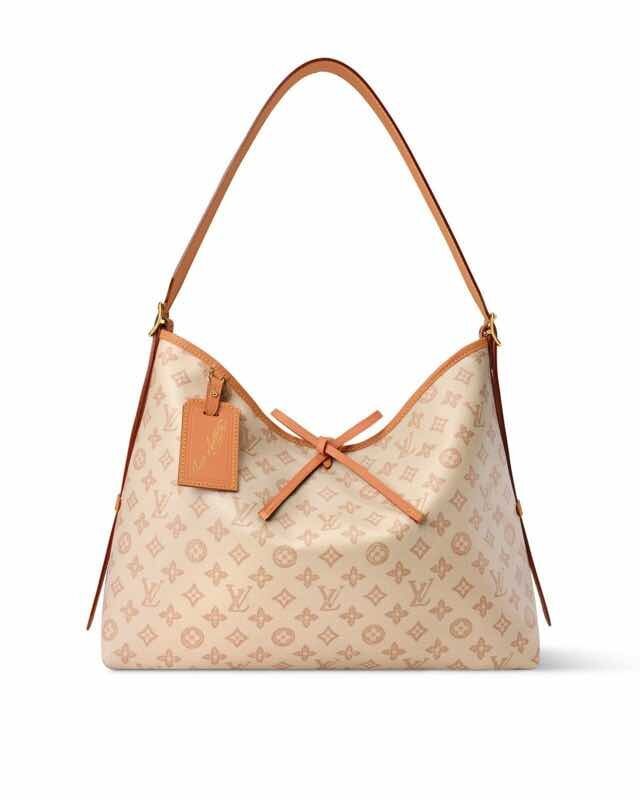
The interlocked LV initials, floral motifs, quatrefoils, and geometric shapes drew inspiration from late nineteenth-century decorative culture — Art Nouveau curves, oriental influences, and the ornamental rigor of fin de siècle Paris.
Most luxury logos scream for immediate recognition. The Monogram never really behaved that way. Even today, its power comes from repetition and rhythm rather than volume.
That distinction matters.
A Chanel double C communicates elegance. A Gucci stripe suggests fashion fluency. The LV Monogram, instead, feels closer to architecture. It operates like a pattern embedded into collective memory.
You don’t merely see it. You recognize it before thinking.
Why has the LV Monogram barely changed in more than a century?
Fashion normally survives through reinvention. The Monogram survived by resisting it.
While entire luxury houses constantly redesign logos to match new creative directors, Louis Vuitton kept the Monogram almost untouched. Technical adjustments arrived over the decades, but the visual identity remained astonishingly stable.
The major shift happened in 1959 with the introduction of lighter coated canvas. Suddenly, the Monogram stopped belonging only to travel trunks and began entering daily urban life through bags like the Speedy and the Keepall.
That transition changed luxury fashion forever.
The Monogram moved from aristocratic travel object to portable cultural symbol.
A detail that often gets overlooked: Louis Vuitton never treated the Monogram as nostalgia. Even when fashion entered hyper-accelerated trend cycles, the Maison understood that permanence itself could become desirable.
In an industry obsessed with novelty, consistency became rebellion.
Matteo Azzolini recently described Milanese luxury culture as valuing “substance over spectacle” and restraint over performance. That same philosophy explains why the Monogram still feels relevant. It doesn’t chase the moment. It outlasts it.
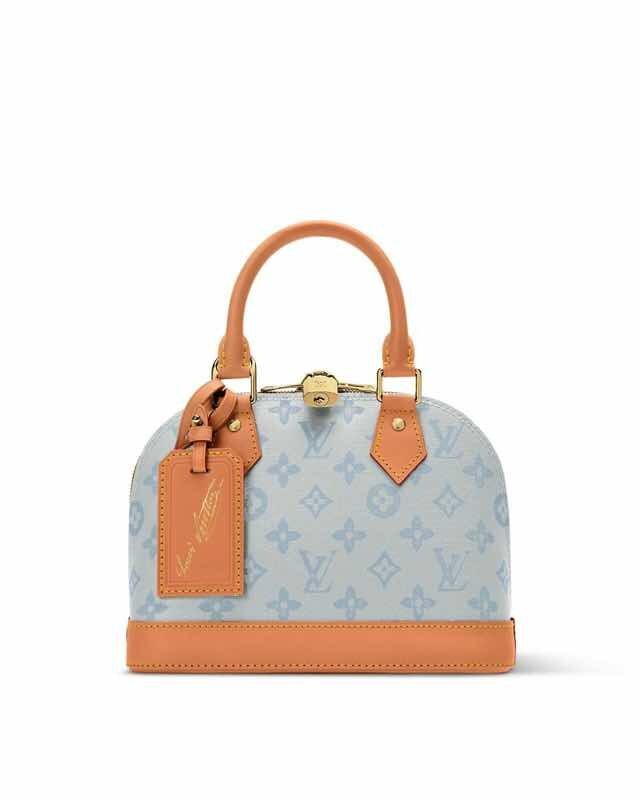
How did the Monogram become part of pop culture?
The real transformation arrived in the early 2000s.
Marc Jacobs understood something crucial before much of the luxury industry did: cultural relevance no longer depended on exclusivity alone. Luxury needed dialogue.
So the Monogram became a canvas.
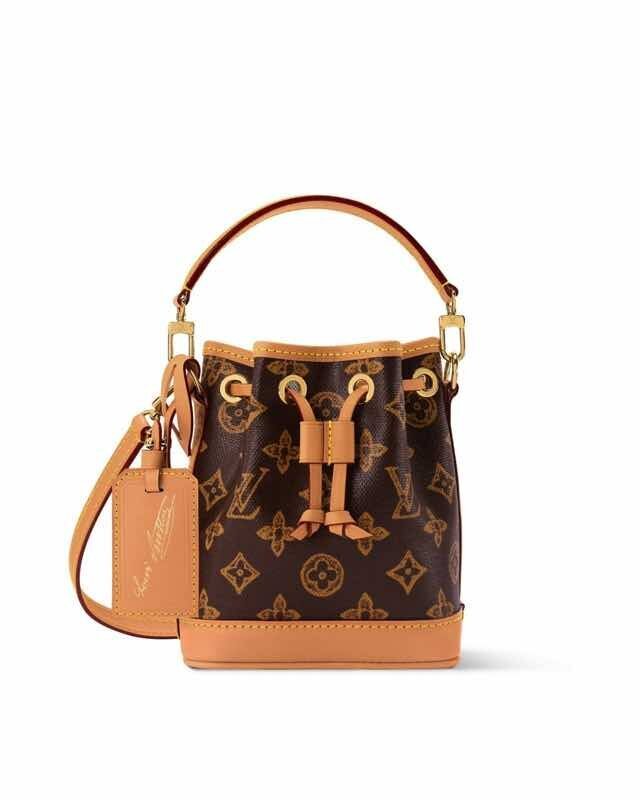
Stephen Sprouse covered it with graffiti. Takashi Murakami exploded it into candy-colored pop surrealism. Yayoi Kusama covered it with obsessive polka dots. Jeff Koons turned it into an art-history collision.
Most collaborations disappear after one fashion cycle. These didn’t.
Because the artists never erased the Monogram. They distorted it while leaving its skeleton intact.
That balance is extraordinarily difficult to achieve. Luxury brands often collapse when trying to look contemporary. They become too ironic, too self-aware, too desperate for relevance.
Louis Vuitton avoided that trap because the Monogram already carried historical weight before entering pop culture. The collaborations added layers instead of replacing identity.
There’s a lesson there that many modern brands still misunderstand.
As Matteo Azzolini observed while analyzing Miu Miu’s success, the strongest luxury houses don’t simply sell products — they sell membership into a recognizable cultural identity. Louis Vuitton mastered that long before social media turned identity into currency.
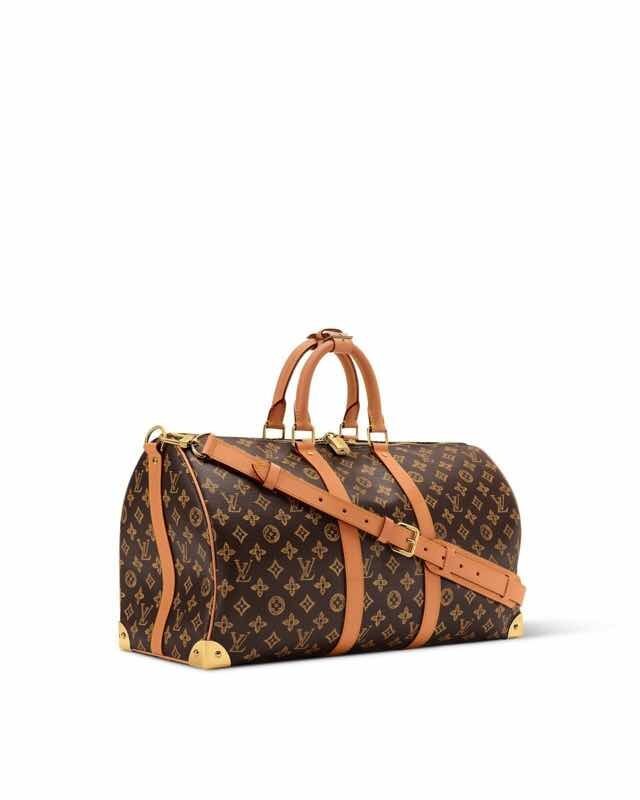
Why is the Louis Vuitton Monogram still the world’s most copied luxury pattern?
Because desire scales faster than exclusivity.
The Monogram became one of the most counterfeited symbols in fashion precisely because it communicates instantly. Even people with zero interest in runway culture recognize it from a distance.
That visibility is both strength and vulnerability.
Authentic vintage Louis Vuitton pieces rarely rely on oversized logos or aggressive branding tricks. The real difference usually sits in quieter details: proportions, canvas texture, stitching rhythm, symmetry, hardware aging.
Counterfeits often imitate appearance but miss discipline.
And discipline is exactly what makes the Monogram endure. Not trendiness. Not virality.
The pattern survives because it behaves like a language with strict grammar rules. You can reinterpret it endlessly, but once the proportions collapse, the illusion breaks.
That explains why authentic vintage Louis Vuitton still dominates resale markets while countless trend-driven “It bags” disappear within three seasons.
What does the LV Monogram represent in fashion today?
In 2026, Louis Vuitton celebrates the Monogram’s 130th anniversary through archival-inspired capsules and references to the Maison’s historic trunks.
But this anniversary doesn’t feel nostalgic.
If anything, it feels strangely current.
Fashion today suffers from acceleration fatigue. Endless microtrends. Endless aesthetics. Endless algorithms deciding what becomes desirable for approximately twelve minutes.
Against that chaos, the Monogram represents continuity.
Not because it refuses change, but because it changes slowly enough to preserve meaning.
There’s a reason certain objects survive generations while others remain tied to a single era. The Monogram belongs to that first category. Like a Barbour jacket inherited from a grandfather or an old Cartier Tank watch passed through a family, it gains cultural density over time.
The pattern no longer belongs only to Louis Vuitton.
It belongs to fashion history itself.
And maybe that’s the strangest achievement of all: a symbol originally designed to prevent imitation became so embedded in visual culture that it transcended the brand that created it.
Some logos advertise.
Others become memory.
If fashion history, archival luxury, and cultural symbols fascinate you, explore more stories on Vintage Italian Fashion.
Join our Community: