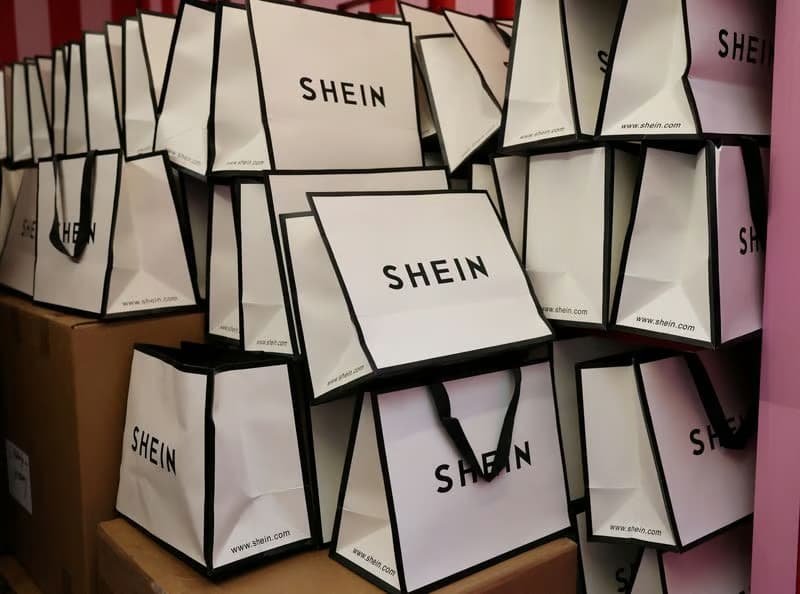


When Shein confirmed its agreement to acquire Everlane in May 2026, the fashion world reacted with a mixture of disbelief, irony and exhaustion. Everlane was not just another direct-to-consumer basics brand. For many Millennial shoppers, it had represented the promise that fashion could be affordable, minimalist, transparent and morally cleaner than the fast-fashion system it claimed to resist.
Shein, by contrast, has become the global symbol of ultra-fast fashion: endless drops, algorithmic production, low prices and a business model built around speed. The idea that Everlane, once associated with “radical transparency”, would become part of Shein’s expanding retail universe felt less like a normal acquisition and more like a cultural diagnosis.
The deal, reported by AP and Retail Dive on May 22, 2026, gives Shein ownership of a brand known for sustainability messaging and supply-chain transparency. Everlane did not disclose the purchase price, while earlier reports cited a valuation around $100 million. The acquisition is still more than a corporate transaction. It asks a question that fashion consumers have been avoiding for years: what happens when ethical branding becomes just another market position?
Everlane was founded in 2011 with a clear promise. It told customers where garments were made, what they cost to produce and why “fewer, better things” could be a serious alternative to disposable fashion. Its clean T-shirts, cashmere knits, denim and loafers became a uniform for a generation that wanted to shop well without feeling complicit in fashion’s worst habits.
But the story of Everlane also shows the limits of consumer-led sustainability. A brand can publish factory information, use better materials and speak the language of responsibility, yet still operate inside the same growth economy as everyone else. It still needs scale, capital, margins and constant customer attention. In that system, ethics can become part of the packaging.
This is why the Shein-Everlane deal matters globally. It signals the end of a certain optimism: the belief that a polished, digitally native brand could fix fashion by giving consumers better choices. The truth is harder. If sustainability depends entirely on branding, it can be bought, sold, repositioned or absorbed by the very system it once opposed.
For Vintage Italian Fashion, the most interesting lesson is not simply that Everlane “failed” or that Shein “won”. The deeper point is that the vocabulary of sustainability is losing credibility when it is detached from time. A garment is not sustainable because a brand says it is. It becomes sustainable when it lasts, when it can be repaired, resold, reinterpreted and worn beyond the season in which it was marketed.
That is where vintage enters the conversation.
Vintage fashion is not perfect, and it should not be romanticized blindly. It has its own problems: authentication, pricing bubbles, condition issues, access and over-commercialization. But it has one advantage that new “ethical” fashion often lacks: proof of survival. A vintage Armani blazer, a 1990s Prada skirt, a Fendi Baguette from the early 2000s or a well-preserved Max Mara coat has already passed the first test of sustainability. It still exists. It still works. It still has cultural and material value.
In an industry obsessed with newness, vintage shifts the focus from promise to evidence. The garment does not need a campaign to prove its durability. Its construction, fabric, label, wear history and continued desirability tell the story. This is why vintage is increasingly becoming not just a style choice, but a trust mechanism.
The Shein-Everlane acquisition also exposes the weakness of the “ethical basics” model. For years, consumers were told that the answer to fast fashion was to buy better basics from cleaner brands. But basics are easily copied, margins are pressured and the aesthetic of restraint can be reproduced by almost anyone. A white shirt, a straight-leg jean or a minimalist knit may look ethical, but appearance alone says little about labor, waste or longevity.
Vintage asks a different question: not “who made this claim?” but “why did this piece endure?” That question is far more difficult to fake.
The global luxury market already understands this. Archival fashion, resale platforms, vintage handbag auctions and brand-run repair programs all show that the future of luxury is increasingly tied to the past. Consumers are not only buying logos. They are buying continuity, provenance and the feeling that an object has escaped the logic of disposability.
This is especially relevant to Italian fashion. Italian luxury has always been strongest when it combines design with material intelligence: tailoring, leatherwork, knitwear, textile innovation and artisanal finishing. The best vintage Italian pieces carry those values without needing to perform sustainability as a trend. They are sustainable because they were made to remain desirable.
The Everlane story is therefore not just a scandal of contradiction. It is a reminder that fashion’s most credible future may not come from another “conscious” capsule collection, another transparency landing page or another sustainability slogan. It may come from wardrobes already in circulation.
When an ethical brand can be acquired by an ultra-fast-fashion giant, the consumer is left with a sobering realization: values printed on a website are fragile. Material quality is harder to erase. Provenance is harder to invent. Time is harder to fake.
Vintage is not the only answer to fashion’s sustainability crisis. But in this moment, it may be the most honest one.
Because the archive does not promise. It proves.
Join our Community: